sábado, 21 de enero de 2017

Macbeth by William Shakespeare

William Shakespeare
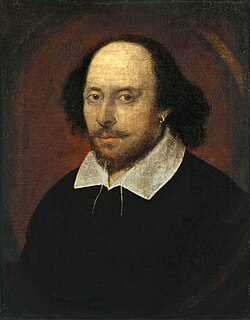
Shakespeare.jpgShakespeare was born on April the 26th in 1564 and died on April the 23th in 1616. He was an English playwright, poet and actor, considered the most important writer of the English language and the most popular in world literature.

Macbeth
Act 1
This story happens in Scotland, it begins with the war between the king of Scotland, Duncan and the king of Norway. The play opens with Duncan who learns of Macbeth’s bravery during a battle against Macdonald. At the same time, some news arrives announcing the arrest of the traitorous Thane of Cawdor, announcement that gave this new title to Macbeth.
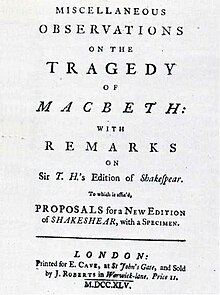
Resultado de imagen para macbeth original edition
Returning from the battle, Macbeth and Banquo meet three witches, they tell that Macbeth will be the Thane of Cawdor and king of Scotland as well, and Banquo the father of the kings. After the witches were gone, Macbeth and Banquo meet two noblemen, Ross and Angus who announce to Macbeth his new title as Thane of Cawdor and after this announcement Macbeth just thinks one thing: Duncan’s murder.  
Duncan announces to Macbeth that he will be paid for his visit at the castle. Lady Macbeth receives a letter from Macbeth saying all about the witches’ prediction and how the first one was already done. Pleased by the news, she decides to invoke several powers in order to get stronger and help murdering King Duncan. When Macbeth arrives, she tells him her plans against the king.
Duncan arrives at the castle but only Lady Macbeth greets him, she looks for Macbeth who is alone in a room regretting and thinking about Duncan’s murder. Lady Macbeth tells him that he just gets to be a man, killing the king and then she talks to him about her plan to murder Duncan, Macbeth agrees: They would kill him after his bodyguards get drunk so that they could incriminate on bodyguards.
Act 2
Macbeth sees a vision in which a bloody dagger is leading to Duncan’s room, afterword, he listens to the bell announcing that Lady Macbeth’s part is done so that he can continue with the murderous plan. Lady Macbeth waits for Macbeth, he arrives still with the dagger, Lady insults him telling him that he is too weak and then she puts the dagger on the bodyguards. Macbeth is concerned, he thinks he shall sleep no more. Lady goes back and tells him than drinking some water they shall forget all what happened. The thanes Macduff and Lennox arrive, the first thane discovers Duncan’ dead body, Macbeth had murdered the two bodyguards too. Duncan’s sons, Malcolm and Donalbain are afraid to be in danger too, therefore, they decide to move to England and Ireland. Both become suspects to have killed their father, reason why Macbeth is crowned king of Scotland.
 Act 3
In order to thwart the witches prophecy that Banquo would be the fathers of the kings, Macbeth hires two murderers to kill as Banquo as his son Fleance. Lady Macbeth does not know about these plans. A third man emerges to kill Banquo, meanwhile Fleance can escape. During a banquet, Banquo’s ghost appears to Macbeth what makes Macbeth really scared. All the thanes in the banquet begin wondering about Macbeth’s behavior which Lady Macbeth is trying to disguise. After this appearance, Macbeth decides to go with the witches to talk about his future again. Meanwhile, Macbeth’s thanes begin doubting him, reason why Malcolm and Macduff meet in England to organize an army to march on Scotland.


Act 4
The witches show to Macbeth three new apparitions, the first one warns him against Macduff, the second one tell him not to be afraid of anybody and the third one that he just fall when Birnam Wood comes to Dusinane Castle. Macbeth is not afraid and asks to the witches for the Banquo’ prophecy and the witches show him of eight kings looking like Banquo. With several proves, Malcolm proves Macduff’s loyalty, once he proved Macduff’s loyalty for Scotland, both decide to organize their plan against Macbeth, when Macbeth arrives to Scotland, he has Macduff’ wife and children dead.
Act 5
Lady Macbeth presents problems to sleep, in the doctor, she tells unwittingly him all about the murder. The doctor cannot find a cure for her problem and Macbeth gets too upset for this. The cry because of the Lady Macbeth’s death is heard in the whole castle; Macduff, Malcolm and Siward’s army approached when this occurred. Macbeth cannot understand his lady’s death; it was supposed to happen in the future.
Macbeth strongly believes yet in the second prophecy that he is impregnable. However, all men from Malcolm army were told to cut a branch to look disguise the army’s total number.  Macbeth’s servant informs him about the enormous army, Macbeth seems to be worried but he continues fighting against the army coming towards his castle.

In battle, Macbeth killed Young Siward, afterword, Macduff challenges Macbeth telling him that he is not exactly of woman born, he was extracted from his mother’s womb. Macbeth is prettified but he is not afraid of Macduff. Finally Macduff kills Macbeth and decapitates him as well. At the end Malcolm is crown the new king of Scotland.

Little women

Louisa May Alcott
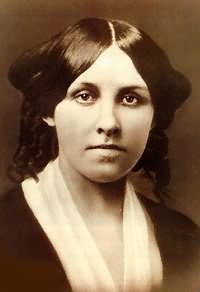
Louisa May Alcott headshot.jpgMay Alcott was born on November the 29th in1832, and she died on March the 6th in 1888. She was an American poet and novelist really known because of her trilogy beginning with Little women (1868), continuing with Little men (1871) and finishing with Jo’s boys (1886). During her life, she belonged to the Abolitionism and Women’s suffrage movement. Her writings were known because they dealt with themes such as adultery and incest which were taboos during this time. Besides, she belonged to the Trascendental club alongside Ralph Waldo Emerson, Henry David Thoreau, Margaret Fuller and Amos Bronson Alcott.
Little Women (Summary)
Resultado de imagen para little women original edition“Little women” is the story about four girls’ lives of whom two are becoming teenagers: Meg and Jo. This story occurs during approximately 15 years. Each girl imagines her future in a castle but her lives in a very different way to what they hope. Beginning with Meg, before her father lost all his fortune she marries Mr. Brooke, Laurie Laurence’s tutor, together live in a modest house. Meg has a friend, Sally, she is actually very rich but Meg has to understand and to learn how to live without too much money as her friend, however, Meg realizes that Sally is not apparently so happy living with a self-centered husband. On the other hand, Jo is talented writing very nice, she develops too much this ability beginning with short romances for a local paper and then writing for a newspaper in NY. After her sister’s death, Beth, Jo begins having problems for writing due to the pain inside her. Beth, she is the only sister with no ambitions for her life, the only thing she wants is to live with her parents practicing her music. She is extremely polite and good person, someone difficult to find. She does not like to complain about what she cannot have and always have the good side for every bad situation. Her only problem is her shyness, reason why she is educated at home. The youngest from all the sisters is Amy, she definitely wants to marry just for money, her desire: to move to a big city, having rich friends, excellent wealth and too many jewels. Despite of having the chance of getting of her dreams, she does not accept them and she goes back with her old friend Laurie. Surprisingly, going back with Laurie, almost all her dreams come true because her friend will receive all her grandfather fortune. At the end of the story, these sisters understand that money cannot make people happy in the same way that a loving family.
Style
The story’s style is very formal and partly autobiographical due to the fact that it was inspired in Louisa’s childhood alongside her sisters in Massachusetts. The story is aimed at young women.


jueves, 19 de enero de 2017

My inspiration

LORD BYRON.
George Gordon Byron, 6th Baron Byron, FRS (22 January 1788 – 19 April 1824), commonly known simply as Lord Byron, was an Anglo-Scottish poet, politician, and a leading figure in the Romantic movement. Among his best-known works are the lengthy narrative poems Don Juan and Childe Harold's Pilgrimage, and the short lyric poem "She Walks in Beauty".
The most flamboyant and notorious of the major Romantics, George Gordon, Lord Byron, was likewise the most fashionable poet of the day. He created an immensely popular Romantic hero—defiant, melancholy, haunted by secret guilt—for which, to many, he seemed the model. 
He is also a Romantic paradox: a leader of the era’s poetic revolution, he named Alexander Pope as his master; a worshiper of the ideal, he never lost touch with reality; a deist and freethinker, he retained from his youth a Calvinist sense of original sin; a peer of the realm, he championed liberty in his works and deeds, giving money, time, energy, and finally his life to the Greek war of independence.

My inspiration
Before writing my poem called “sweetie” I had already made several tries with other poems, but all of them had something in common: the main idea was LOVE, I consider myself as a romantic writer, no matter how much I try writing other kind of themes I will always write about love. I really like the way poets used to write during the Romanticism era, authors wrote leaving their souls on a paper describing how much they felt at that moment. One of these authors is Lord Byron, as it was already mentioned in his biography, he was considered as one of the major Romantics, when reading one of his poems it is possible to feel even in love with the person Byron is talking about, until now I have read two of his poems and I can perceive the passion he leaves on the paper, his big love towards the other person, remembering all details about that he had lived.
I based my poem on Byron because all I want to show is passion toward something, in this case my kitty, I want all those who read my poem do understand what I feel for her, in the same way Byron used to show in his poems, I do not want to forget any detail of all I feel when I see my cat.

She Walks in Beauty
By Lord Byron
She walks in beauty, like the night
Of cloudless climes and starry skies;
And all that's best of dark and bright
Meet in her aspect and her eyes:
Thus mellow'd to that tender light
Which heaven to gaudy day denies.

One shade the more, one ray the less,
Had half impaired the nameless grace
Which waves in every raven tress,
Or softly lightens o'er her face;
Where thoughts serenely sweet express
How pure, how dear their dwelling-place.

And on that cheek, and o'er that brow,
So soft, so calm, yet eloquent,
The smiles that win, the tints that glow,
But tell of days in goodness spent,
A mind at peace with all below,
A heart whose love is innocent!


“She walks in beauty” is one of the most known poems written by Lord Byron, I wanted to compare it with my poem because I implemented almost its same style, using similes and describing someone’s beauty. 

Literary genres: Poetry

I Sing the Battle                                                            
By Harry Kemp

I SING the song of the great clean guns that belch forth death at will.
"Ah, but the wailing mothers, the lifeless forms and still!"

I sing the song of the billowing flags, the bugles that cry before.
"Ah, but the skeletons flapping rags, the lips that speak no more!"

I sing the clash of bayonets, of sabres that flash and cleave.
"And wilt thou sing the maimed ones, too, that go with pinnedup sleeve?"

I sing acclaimed generals that bring the victory home.
"Ah, but the broken bodies that drip like honey-comb!"

I sing of hosts triumphant, long ranks of marching men.
"And wilt thou sing the shadowy hosts that never march again?"

What makes it a poem

What makes different poetry from other genres is the way sentences are organized, when writing a poem it is necessary to write several verses in stanzas. The main idea of a poem is to express feelings by using different figurative language that catches the audience’s attention. There are several techniques of figurative language: onomatopoeia, alliteration, hyperbole, metaphor, simile, idioms and personification. A good poem must have at least one or two of these.
In the “I sing the battle” by Harry Kemp’s case, we can find three of them: personification, simile and alliteration.

PERSONIFICATION: “great clean guns that belch forth death at will.” This verse is an example of personification because the author presents the guns as beings that can belch, action that does not happen in real life. The same case with “the bugles that cry before.” In this case bugles can cry but it does not happen in real life. The author puts in this way in order to catch audience’s attention by showing how difficult the battle is.
SIMILE: "Ah, but the broken bodies that drip like honey-comb!" in this case, the other uses like in order to compare the broken bodies with the honey-comp, referring to the blood from those bodies.
ALLITERATION: “I SING the song, broken bodies, marching men.” The author repeats the initial letters in these verses, considered as a poetic device to catch audience’s attention.

This poem by Kemp is a clear example of what makes poetry; it has several elements that are important when inspiring ourselves writing verses.


Lyterary analysis of Wine of the fairies by Shelley

Wine Of The Fairies - Poem by Percy Bysshe Shelley
I am drunk with the honey wine
Of the moon-unfolded eglantine,
Which fairies catch in hyacinth bowls.
The bats, the dormice, and the moles
Sleep in the walls or under the sward 
Of the desolate castle yard;
And when ’tis spilt on the summer earth
Or its fumes arise among the dew,
Their jocund dreams are full of mirth,
They gibber their joy in sleep; for few 
Of the fairies bear those bowls so new! 
Narrative elements
SETTING: Romanticism, (18th century) in the fairies’ castle. 
THEME: Why do we feel so happy when drinking?
PLOT: A man describing how much he loves wine from fairies.
CHARACTERS: The narrator and the fairies
POINT OF VIEW: The atmosphere evokes happiness, because the man is stoked with the wine flavor from the fairies.   
FIGURES: imagery and rhyme 
Wine of the fairies
With this poem, Shelley wants to show the fascination of a man for a drinking, in this case wine, it can be seen in the very first verse “I am drunk with the honey wine Of the moon-unfolded eglantine,” this was perhaps the first taste of this wine and he clearly fall in love with it because he began to feel really fine with it. This fascination goes until the point of asking why we feel so good when drinking, because as in the poem “Their jocund dreams are full of mirth, They gibber their joy in sleep;”, getting drunk could be for some people the best feeling while for others cannot be in that way.
This is a romantic poem of a man showing his fascination towards the fairies’ wine. Shelley decides to use imagery in order to show what the wine can do in some fields like dry land: “And when ’tis spilt on the summer earth Or its fumes arise among the dew,” this fume that shows the perfection of the drinking making him really happy. On the other hand, Shelley uses rhyme, in order to preserve the romantic style thanks to the sounds, in the first and second verse, both of them have the same sound in their last word, and he repeats the process in the whole poem, process that makes more romantic, more pleasant for the reader. When talking about characterization, the man who is drinking is a real lover of wine that enjoys too much this drinking, he shows that not all the time we fall in love with people but with food as well, and the fairies that look to be very clever for making a wine capable of charming men. This poem was written during the Romanticism era, in which people were freer to write as it is represented in this poem, talking about imaginary creatures as the fairies, besides, the man seems to be in a castle, perhaps with drunk men stoked as well because of the fairies wine.
There are too many effects that alcohol provokes in our bodies, and in this case, wine is not the exception, a man who is really fascinated for its flavor, for all this substance makes him feel that it makes him write romantic verses.

Personally, I think that drunken people become more honest, we can do whatever we want without worrying about it. However, it is necessary to be careful when drinking for avoiding problems with the rest of people.

Literary analysis of I saw thee weep by Lord Byron

I Saw Thee Weep (1815)

I saw thee weep—the big bright tear
Came o’er that eye of blue;
And then methought it did appear
A violet dropping dew:
I saw thee smile—the sapphire’s blaze
Beside thee ceased to shine;
It could not match the living rays
That filled that glance of thine.

As clouds from yonder sun receive
A deep and mellow dye,
Which scarce the shade of coming eve
Can banish from the sky,
Those smiles unto the moodiest mind
Their own pure joy impart;
Their sunshine leaves a glow behind
That lightens o’er the heart.
George Gordon, Lord Byron

Narrative elements
SETTING: Romanticism, (18th century) in a cemetery. 
THEME: Why is it too hard to forget somebody after death?
PLOT: A man describing how much he loves his deceased lover.
CHARACTERS: The narrator and his lover 
POINT OF VIEW: The atmosphere evokes sadness, someone who lost his lover and he cannot forget anything about her.  
FIGURES: Simile and rhyme
I Saw Thee Weep (1815)
Lord Byron was a romantic during the 18th century, and “I saw thee weep” shows how much somebody to another person even after his or her death, how somebody can remember the exact details about what he lived with this person “I saw thee weep—the big bright tear Came o’er that eye of blue;” this character describes too much what his lover used to do. He continues thinking about those details even his lover is gone, the last verse evokes this “Their sunshine leaves a glow behind That lightens o’er the heart.” His lover was really special and apparently a good person that until the last day of her life she was smiling, evoking all kind of beautiful feelings that made happy and at the same time sad to her lover.
This is a romantic poem in which Byron decides to use rhyme so that it can sound more special for readers, he put the same sounds for the first and third verse, and the same for the second and fourth verse, it is possible to find the rhyme in the last verse of each word. On the other hand, he used similes like for example: “As clouds from yonder sun receive A deep and mellow dye,” this simile in order to highlight the beauty of his lover’s smile comparing it with the clouds and the sun, a smile very difficult to explain. When talking about characterization, the narrator shows to be a depressed person without his lover, he really misses too much, and when writing about her, he evokes sadness, on the other hand, the woman looks to be a wonderful woman that being alive she gave the best moments to her man, making him really happy but due to this also, making him really sad with his death. The poem was written in the 18thcentury during the Romanticism era, it preserves the essence of this time; the man, maybe is in a cemetery, in front of his lover’s grave, telling her all the good moments they spent together, remembering her nostalgically.
Coming back with the main idea of the poem, Byron pretends to show how so many times good moments ironically make us feel really sad when that special person is gone, while this man remembered all these moments, his world was falling down inside him, seeing his lover in a grave, she, that in a moment was the reason of all his happiness, become suddenly in the reason of his sadness. Even after death, too many times we continue loving that person by thinking about the special moments, and this depending on the person may be a reason to continue or to end with his/her life.
I agree with what this poems presents, when we lose someone, good moments arrive to our head and this makes us feel really bad, we continue loving this person without knowing until what moment, sadness is the only we feel now, and we consider that we are not able to live any longer. This poem is a reflection to live all we can with our beloved people because in any moment we can be without them.


Literary analysis of Eternal love by Gustavo Adolfo Becquer.

Amor eterno

Podrá nublarse el sol eternamente;
Podrá secarse en un instante el mar;
Podrá romperse el eje de la tierra
Como un débil cristal.

¡Todo sucederá! Podrá la muerte
Cubrirme con su fúnebre crespón;
Pero jamás en mi podrá apagarse
La llama de tu amor.
Gustavo Adolfo Becquer
Eternal love (translation)
The sun may hide eternally
The sea may be dried for a moment.
The Earth’s Axis could crash
As a fragil crystal.

Everything will happen! I may be
Covered by the death with its funeral shroud
But the flame of your love
will never  go out. 
Narrative elements
SETTING: Romanticism, (18th century) in the man’s house.
THEME: Could we love until the end of our lives?
PLOT: A man telling how much he loves is lover.
CHARACTERS: The narrator and his lover  
POINT OF VIEW: The atmosphere evokes romanticism, a real lover that is in love with someone, a man who is not afraid of anything because for him the most important thing is love towards his lover.  
FIGURES: Simile and Hyperbole  
Eternal love
“Eternal love” by Gustavo Adolfo Becquer is a clear example of how Romanticism era was; the last verse “But the flame of your love will never  go out.” with these sentence, it is possible to feel how much this man was in love with a woman, that for him death was not an impediment to continue loving her; death may be perceived from this part “I may be Covered by the death with its funeral shroud” and from this emerges the question: could we love until the end of our lives? Becquer shows that it is possible to feel love until that moment.
Becquer presents a romantic poem and using hyperboles he shows how something impossible may become possible due to his love, “The sun may hide eternally” he exaggerates with his love until the point of disappearing the sun, even, until the point of drying the sea as in this verse “The sea may be dried for a moment.”  He clearly shows that he would be able to do the impossible for proving his love toward her. On the other hand, he compares by using similes and in that way continues showing how big is his love: “The Earth’s Axis could crash As a fragil crystal.” It does not matter if it is the end of the world, he would continue loving his lover. When talking about characterization, the main character is the narrator that in this case he is the man telling what he would do for love, he really looks like a passionate man for his woman, also he is very romantic with all kind of abilities, on the other hand, his lover, she may be really beautiful and a woman who deserves to be loved in the way he loves her. This poem was written during the Romanticism age, it clearly shows this, due to all the passion that is evocated from it; the man is probably at home, perhaps he is really sick reading the news about that is happening around the world, the problems with nature against humans that are destroying the planet, reason why he decides to write these verses showing that despite of these problems, his love will be always the same.
At the beginning the central idea was if a person could love until the end of his/her life, Becquer shows us that this is fairly possible, there are many people who have the ability of loving so much to somebody no matter what, where, when, they would do anything for their especial person, even dying, they will be always feel more complete with this person, a best person and for this reason they want to give everything they can do (even more) to them.
Personally, I have just seen this situation in movies, in TV, but I think that even though it is difficult to find someone with the characteristics mentioned above, it is not impossible, it can exist those lovers who will feel the same for a person until the end of their lives.